
Why Connecticut Patios Heave, and What's Under One That Won't
Why Connecticut Patios Heave, and What's Under One That Won't
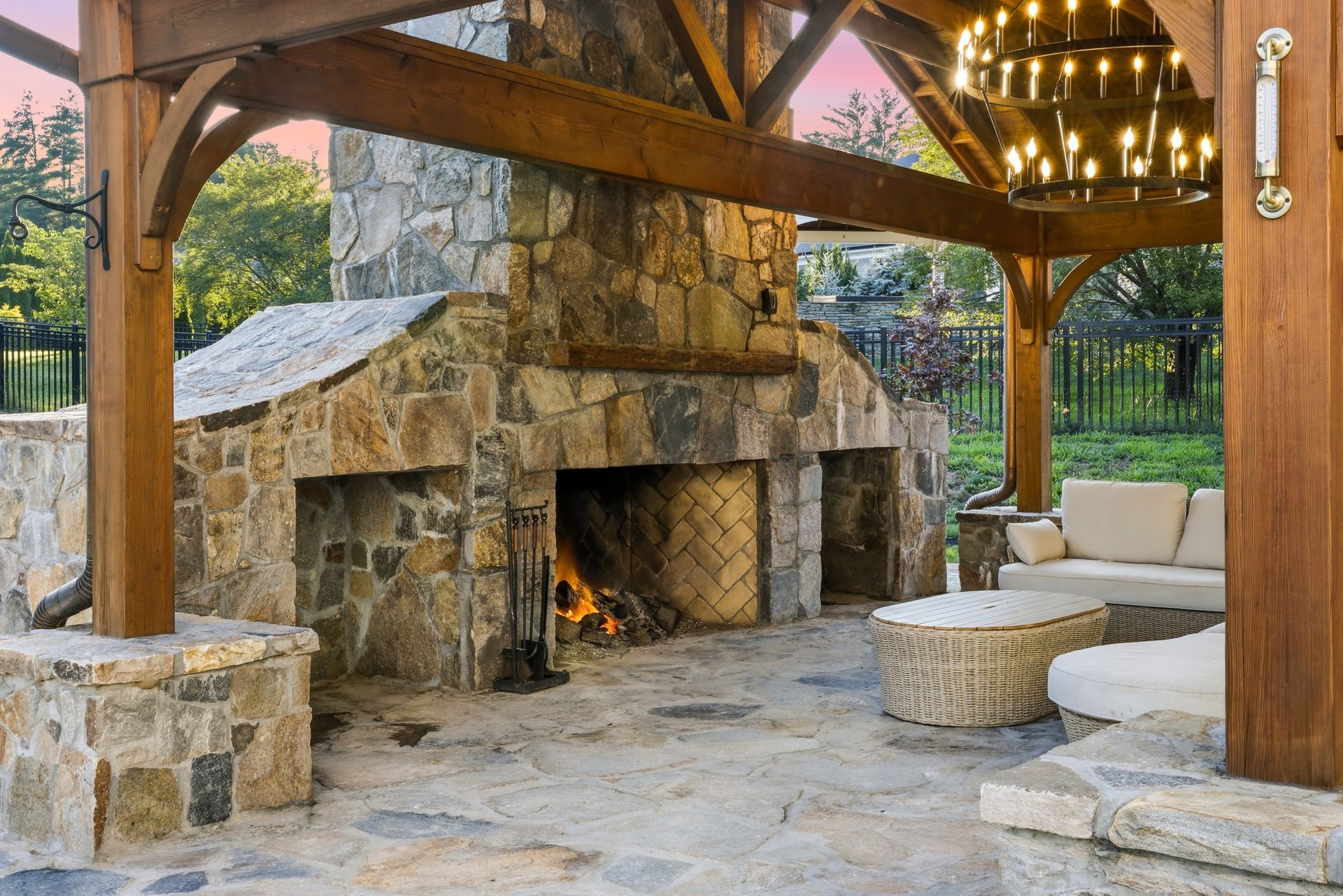
If your patio was flat in the fall and lumpy by spring, the stone probably isn't the problem. Frost is lifting it from underneath. In Connecticut it happens every winter, and whether a patio survives it comes down to one thing you never see: what's under the stone.
We've built and repaired patios across Fairfield and Litchfield County for three generations. Here's what's happening, how to spot it early, and what goes under a patio that stays level.
What is frost heave?
Frost heave is the ground pushing up as it freezes. Most people assume it's just water expanding into ice, but the bigger force is something called an ice lens.
As cold works its way down into wet soil, water from the unfrozen soil below is pulled up toward the freezing layer. There it builds into thin layers of pure ice, and those layers keep growing as long as water keeps arriving. Each one lifts the soil above it, along with anything sitting on that soil, like your patio.
Frost heave needs three things at once:
- Freezing temperatures reaching into the ground.
- Fine soil (silt or clay) that can wick water upward.
- A supply of water in that soil.
Take away any one of the three and heaving largely stops. That's the whole idea behind a patio that stays flat.
Why it's worse in Connecticut
Connecticut gives frost heave all three ingredients:
- Deep frost. The state building code requires footings for structures to go 42 inches deep, because that's how far frost can reach here.
- Freeze-thaw cycles. Our winters swing above and below freezing many times. Every swing can lift a stone and let it settle back slightly out of place.
- Wet, fine soils. Glacial till, clay and silty soils are common across Fairfield and Litchfield County. They hold water and wick it upward, which is exactly what ice lenses need.
Inland, in the Litchfield Hills, winters are longer and colder than on the shoreline, so the frost gets deeper and stays longer.
A patio isn't a house. It doesn't sit on 42-inch footings, and it doesn't need to. It "floats" on what's underneath it. That's why the layer under the stone decides everything.
Signs your patio is heaving
Heaving usually starts small. Walk your patio in early spring, once the ground has thawed, and look for:
- Stones that rock when you step on the edge.
- Raised edges you can catch a toe on, especially along the outside border.
- Puddles in new places after rain, where the surface has tilted.
- Widening or uneven joints, with sand washing out or weeds growing through.
- Cracked mortar joints on a mortared patio, or cracks running through the stone itself.
- A patio that changes with the seasons: bumpy in March, almost flat again by July.
That last one is the giveaway. If a patio moves up in winter and settles back in summer, the problem is water and soil underneath, not the stone on top. It will move a little more every year until it's fixed.
What's under a patio that won't heave
You can't stop frost from reaching under your patio. What you can do is take away its other two ingredients, fine soil and water, right where the patio sits. A patio built for Connecticut has five layers of protection, from the bottom up.
1. Dig out the soft stuff. Topsoil, roots and organic material hold water and compress over time. They all come out until the excavation reaches firm native soil. On wet or clay-heavy sites, a geotextile fabric goes down next, so the clay can't mix up into the gravel over the years.
2. A deep, compacted gravel base. This is the layer that matters most. Crushed stone doesn't wick water the way silt and clay do, so ice lenses can't build up inside it. Paver manufacturer Unilock recommends 6 to 8 inches of base for patios and walkways in established yards, 8 to 10 inches in newer developments where the soil has been disturbed, and at least 8 inches on clay. The base goes down in thin layers, and each one is compacted with a plate compactor before the next goes on. Gravel dumped in all at once and compacted only on top will settle.
3. Somewhere for the water to go. The finished surface slopes slightly away from the house, about a quarter inch per foot, so rain runs off instead of soaking in. Where water collects naturally, like at the bottom of a slope or under a downspout, it needs a planned way out: a drain, a gravel trench, or a regraded yard.
4. Edges that hold. Without a solid edge restraint, the outer stones creep outward a little every freeze-thaw cycle, and the joints open up. That's why heaving so often starts at the border.
5. The right setting bed and joints. For dry-laid bluestone and pavers, the stone sits on a thin, level bedding layer, and the joints are filled so water stays on top instead of running down into the base. Mortared bluestone is different. It needs a reinforced concrete slab, and that slab needs its own gravel base underneath. A slab poured straight onto soil heaves just like stone does, and it cracks the mortar joints with it.
None of these layers shows once the patio is finished. That's exactly why two patios that look the same on the day they're installed can look completely different three winters later.
Can a heaved patio be fixed?
Usually, yes, and often with the same stone. The right fix depends on why it moved:
- A few loose or rocking stones at the edge: lift them, re-level the bedding, fix the edge restraint and reset them. This is a small repair.
- One low or high area, often near a downspout or the bottom of a slope: this is usually a water problem. Lift that section, redirect or drain the water, rebuild the base there and relay the stone.
- The whole patio moves every winter: the base is the problem. Resetting the stones on top only buys a season or two. The lasting fix is lifting the patio, digging out and rebuilding the base properly, and relaying the stone. Good bluestone and natural stone can almost always be reused.
When to deal with it
The best time to look at a heaved patio is early spring, after the thaw. That's when the damage is easiest to see and measure. Repairs and new patios are built once the ground is no longer frozen.
If you already know your patio has a problem, fall and winter are the best time to get an estimate and a plan in place, so the work can be scheduled as soon as the ground allows.
Frequently asked questions
How deep should a patio base be in Connecticut? It depends on the soil. Unilock recommends 6 to 8 inches for patios in established yards, 8 to 10 inches in newer developments, and at least 8 inches on clay. Wet or clay-heavy sites need the deeper end, plus drainage.
Will polymeric sand stop frost heave? No. It helps keep water and weeds out of the joints, which is worth doing, but it can't make up for a thin or poorly compacted base.
Is bluestone or pavers better for avoiding heave? Both hold up well on a proper base. Dry-laid stone flexes slightly and can be reset if it ever moves. Mortared bluestone is rigid, so if the slab under it moves, the joints crack. That makes the base under a mortared patio even more important.
Will sealing my patio stop it from heaving? No. Sealer protects the surface from stains and water absorption. Heaving starts below the patio, in the soil.
Does de-icing salt cause heaving? No, but over time salt can damage the surface of some stone and wear down mortar joints. Use it sparingly, or use sand for traction instead.
Is your patio moving?
Whether it's a few rocking stones or a patio that shifts every winter, we'll come out, look at what's going on underneath, and tell you honestly whether it needs a reset or a rebuild. We're now booking spring 2027 projects in Fairfield and Litchfield County.
Call 860-481-1099 or request a call back.
This is paragraph text. Click it or hit the Manage Text button to change the font, color, size, format, and more. To set up site-wide paragraph and title styles, go to Site Theme.
